
A Founder’s Guide to Cleaner Revenue Reporting
For SaaS founders, revenue is one of the most important numbers in the business. It shapes investor conversations, growth planning, cash flow decisions, and how the company’s performance is understood.
But there is one common issue many SaaS businesses face:
The cash collected from customers does not always equal the revenue earned.
This becomes especially important when customers pay upfront for annual subscriptions, multi-year contracts, onboarding packages, or bundled services. Without the right accounting process, revenue can be recorded too early, deferred revenue can be missed, and financial reports can become misleading.
That is where ASC 606 comes in.
The Simple Idea Behind ASC 606
ASC 606 is the U.S. accounting standard for revenue recognition. In simple terms, it helps SaaS companies decide when revenue should be recorded.
For a SaaS business, revenue is usually earned as the service is delivered over time.
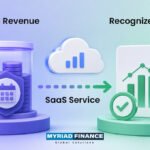
So, if a customer pays $12,000 for a one-year subscription, the company may receive the full cash amount upfront, but the revenue is typically earned month by month over the subscription period.
This distinction matters because it separates:
Cash collected — money received from the customer
Revenue recognized — income earned by delivering the service
Deferred revenue — cash received for services still to be delivered
When these three are not tracked properly, financial statements can give founders and investors the wrong picture.
Why SaaS Founders Should Pay Attention
ASC 606 is not just an accounting rule. It affects how clearly a SaaS founder understands business performance.
If revenue is recognized too early, the company may appear to be growing faster than it actually is. If deferred revenue is not tracked correctly, future service obligations may be missing from the balance sheet. If billing and accounting systems do not match, month-end reporting becomes unreliable.
This can create problems during fundraising, lender review, investor reporting, audits, or due diligence.
For fast-growing SaaS companies, clean revenue recognition is not optional. It is part of building a finance function that can scale.
Where Revenue Recognition Gets Complicated
SaaS revenue often becomes more complex as the business grows.
Founders may need to review how accounting is handled for annual subscriptions, free trials, discounts, upgrades, downgrades, cancellations, refunds, onboarding fees, and bundled software-plus-service packages.
Each of these items can affect when revenue is recognized and how much should remain deferred.
That is why SaaS companies need more than basic bookkeeping. They need a structured revenue process that connects customer contracts, billing data, payment activity, and accounting records.
What Founders Should Review
Before revenue reporting becomes difficult to manage, founders should review whether their accounting system can clearly answer the following:
- Are annual subscriptions being recognized over the correct period?
- Is deferred revenue being tracked accurately?
- Do billing reports match accounting records?
- Are refunds, upgrades, and cancellations reflected correctly?
- Are onboarding or setup fees being reviewed separately?
- Can financial reports support investor or due diligence requests?
If the answer is unclear, the business may need a stronger revenue recognition process.
How Myraid Finance Can Help
At Myraid Finance, we help SaaS businesses build cleaner and more reliable accounting processes for revenue recognition.
Our team works with U.S.-focused SaaS companies that need accurate reporting, better financial visibility, and scalable accounting support. We help founders organize billing data, reconcile payment activity, track deferred revenue, and prepare financial reports that reflect the true performance of the business.
Our experts support SaaS businesses with subscription billing reconciliation, deferred revenue tracking, revenue recognition workflows, month-end close, payment processor reconciliation, management reporting, cash flow visibility, and investor-ready financial statements.
We also help founders understand the story behind the numbers. That means giving clear visibility into revenue earned, cash collected, future obligations, and the financial impact of customer contracts.
With Myraid Finance, SaaS founders can move from uncertain revenue reporting to a more structured, reliable, and decision-ready accounting process.
Final Thought
ASC 606 may sound technical, but the business message is simple:
Do not let upfront cash create a misleading picture of earned revenue.
For SaaS founders, proper revenue recognition helps create cleaner books, stronger investor confidence, and better financial decisions.
Ready to Strengthen Your SaaS Revenue Reporting?
If your SaaS business needs help with revenue recognition, deferred revenue tracking, or investor-ready financial reporting, Myraid Finance can help.
Book a Call with Myraid Finance today to build a cleaner SaaS accounting process and get financial reports you can trust.